Skip to content

Menu

Understanding hair loss

Hair loss facts

Hair loss is common, it has many causes, and not all of it is permanent. Here are the facts, with sources, and where to start.

By the numbers

Hair loss is common

Figures from the American Academy of Dermatology (AAD) and MedlinePlus, from the U.S. National Library of Medicine (NIH). Each one links to its source.

The basics

Hair loss or hair shedding?

On average, humans naturally shed 50 to 100 hairs daily from approximately 100,000 head hairs. While variations exist, an imbalance where hair loss exceeds production may lead to noticeable hair loss.

Hair loss affects both men and women

Hair loss affects both men and women, but the patterns and contributing factors often differ. In men, the most common form is male pattern baldness, which typically presents as a receding hairline combined with thinning at the crown. This pattern is strongly influenced by genetics and is seen more frequently in men. FOLIGAIN® offers science driven cosmetic solutions designed to support scalp health and improve the appearance of thinning hair.

Shop for men
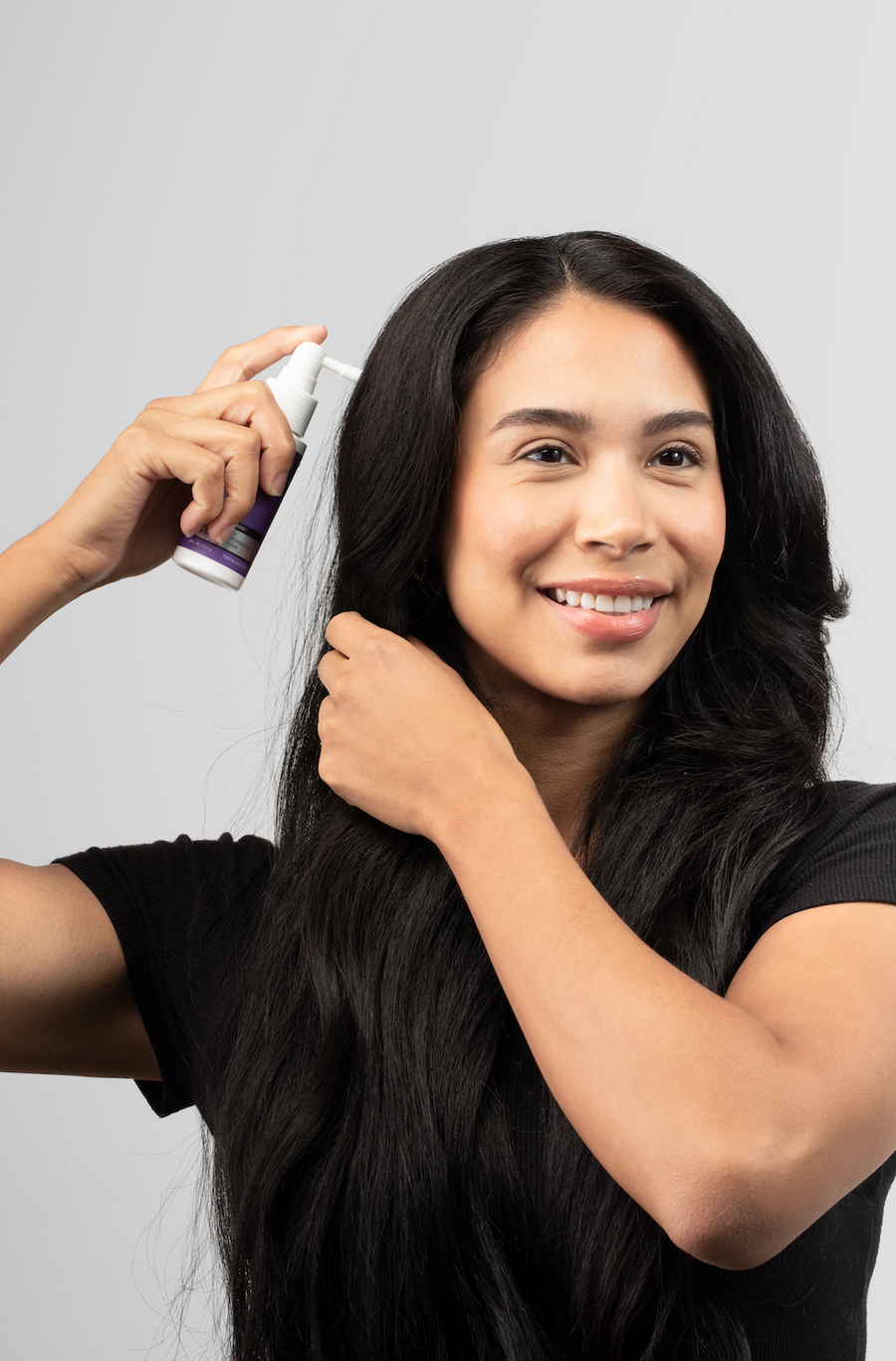
Dropper positioned along a woman’s parted hair to apply a topical scalp treatment

Alopecia or hair loss?

Alopecia is the medical word for partial or complete loss of hair.

The term "hair loss" encompasses a wide range of conditions involving a reduction in the volume or thickness of hair, influenced by factors such as genetics, hormonal fluctuations, medical conditions, or external elements. This umbrella term captures the diverse reasons behind hair thinning, reflecting the complexity of the phenomenon, which can manifest differently in individuals due to various contributing factors.

Shop for women

Shedding and hair loss are not the same

Topic Often temporaryHair shedding Needs the cause foundHair loss
What happens The body sheds a lot more than the normal 50 to 100 hairs a day. The medical term is telogen effluvium. Something stops hair from growing. The medical term is anagen effluvium.
Common causes Giving birth, high fever, an operation, recovering from illness, losing 20 pounds or more, a lot of stress, or stopping birth control pills. Hereditary hair loss, an overreacting immune system, some drugs and treatments, hairstyles that pull on the hair, or harsh hair-care products.
When you notice it Usually a few months after the stressful event. Hereditary hair loss tends to show as gradual thinning, a receding hairline or a bald patch in the center of the scalp.
What happens next It often stops on its own. Within 6 to 9 months, hair tends to regain its normal fullness. Constant stress can make it last longer. Hair will not grow until the cause stops. Many people with hereditary hair loss keep losing hair without treatment.

Source: American Academy of Dermatology, “Do you have hair loss or hair shedding?” (opens in a new tab)

Causes

What causes hair loss?

Choose a cause to see what it looks like and what can help.

Most common

Genetics (hereditary factors)

The most common cause of hair loss is hereditary conditions, such as male-pattern baldness (androgenetic alopecia) in men and female-pattern hair loss in women. These conditions are inherited and result in a gradual reduction of hair follicles, leading to thinning and eventual hair loss.

Signs to look for

  • In women, the first sign is usually overall thinning or a widening part.
  • In men, the first sign is often a receding hairline or a bald spot on top of the head.
  • It can start as early as the teens, but it usually starts later in life.

What helps

Dermatologists say treatment can help slow hereditary hair loss and may help regrow hair. The earlier it starts, the better it works.

Minoxidil is labeled for hereditary hair loss on the top of the scalp: 5% for men, 2% for women. Always read and follow the Drug Facts label.

Sources: American Academy of Dermatology, “Hair loss: Who gets and causes” (opens in a new tab); MedlinePlus Genetics (NIH), “Androgenetic alopecia” (opens in a new tab)

Men and women

How hereditary hair loss differs

The most common kind of hair loss follows a different pattern in men and in women.

Find your stage
Men

Male pattern baldness

Male pattern baldness is commonly hereditary and often appears with age, although some men may experience early thinning in their twenties. It often starts with a receding hairline, then progresses to thinning at the crown and temples, creating a horseshoe pattern over time. FOLIGAIN® develops advanced cosmetic formulas to support a healthier looking scalp and fuller looking hair for men concerned about thinning.

Where it starts
Above both temples and at the crown
How it changes
The hairline moves back into an “M” shape and the top thins
Who
More than half of men over 50 have some hair loss
Minoxidil on the label
5% for men
FOLIGAIN Triple Action Complete Formula For Thinning Hair For Women with 10% Trioxidil - FOLIGAIN Women

Female pattern hair loss

Female pattern hair thinning is a common inherited concern for many women. It often becomes noticeable after menopause, typically beginning at the top of the head. Hair may gradually appear less dense, with a widening part line over time. These changes usually progress slowly over many years. FOLIGAIN® offers science driven cosmetic formulas developed to support a healthier looking scalp and the appearance of fuller hair.

Where it starts
Thinning on top of the head and a wider part
How it changes
The hairline usually stays, and it rarely leads to total baldness
When
Most likely after menopause
Minoxidil on the label
2% for women

Minoxidil is labeled for hereditary hair loss on the top of the scalp; always read and follow the Drug Facts label. Source: MedlinePlus Genetics (NIH), “Androgenetic alopecia” (opens in a new tab)

Myths vs facts

Common myths, checked

What people often believe about hair loss, and what dermatologists and the NIH say.

When to see a doctor

Signs to get checked

Gradual thinning that follows a pattern is usually hereditary. Some hair loss needs a diagnosis first. Contact a health care provider if you notice any of these:

  • Hair loss in an unusual pattern, or bald patches
  • Losing hair quickly, or at a young age (for example, in your teens or twenties)
  • Pain or itching with the hair loss
  • Red, scaly or otherwise unusual skin on your scalp, or signs of infection
  • Acne, facial hair or an irregular menstrual cycle along with hair loss
  • Male pattern baldness in a woman
  • Bald spots in your beard or eyebrows
  • Weight gain, muscle weakness, feeling cold or tiredness along with hair loss

Source: MedlinePlus (NIH), “Hair loss” (opens in a new tab)

What you can do

Care for your hair and scalp

Simple habits and the right products can help you look after the hair you have.

  • Man applying FOLIGAIN topical hair care along a part in his hair
    Daily routine

    Prevention

    Although hair loss cannot always be prevented, many routines can help minimize visible thinning over time. Targeted shampoos support stronger looking strands and help revitalize the scalp to maintain fuller looking hair. FOLIGAIN® creates advanced cosmetic solutions formulated to support scalp wellness and the appearance of thicker, healthier hair.

  • Scalp care

    Hair washing

    Regular hair washing, when done properly, helps maintain scalp cleanliness and overall hair health. Neglecting routine cleansing can lead to buildup that may block pores and leave the scalp feeling congested. FOLIGAIN® creates advanced cosmetic formulas designed to refresh the scalp and support a cleaner, healthier looking environment for hair.

  • Treatments

    Topical treatments

    While not all hair thinning can be prevented, certain approaches may help reduce its progression and support healthier looking hair. Specialized shampoos can strengthen hair and refresh the scalp to help maintain existing density. FOLIGAIN® develops science driven cosmetic formulas designed to support scalp health and the appearance of fuller, stronger looking hair.

    Minoxidil is labeled for hereditary hair loss on the top of the scalp; always read and follow the Drug Facts label.

Find the options made for your hair

Explore FOLIGAIN® minoxidil treatments and TRIOXIDIL® hair care for men and for women.

Minoxidil is an FDA-regulated over-the-counter drug for hereditary hair loss. TRIOXIDIL® products are cosmetics. Results vary.

Shopping Cart

Your cart is currently empty

Shop now